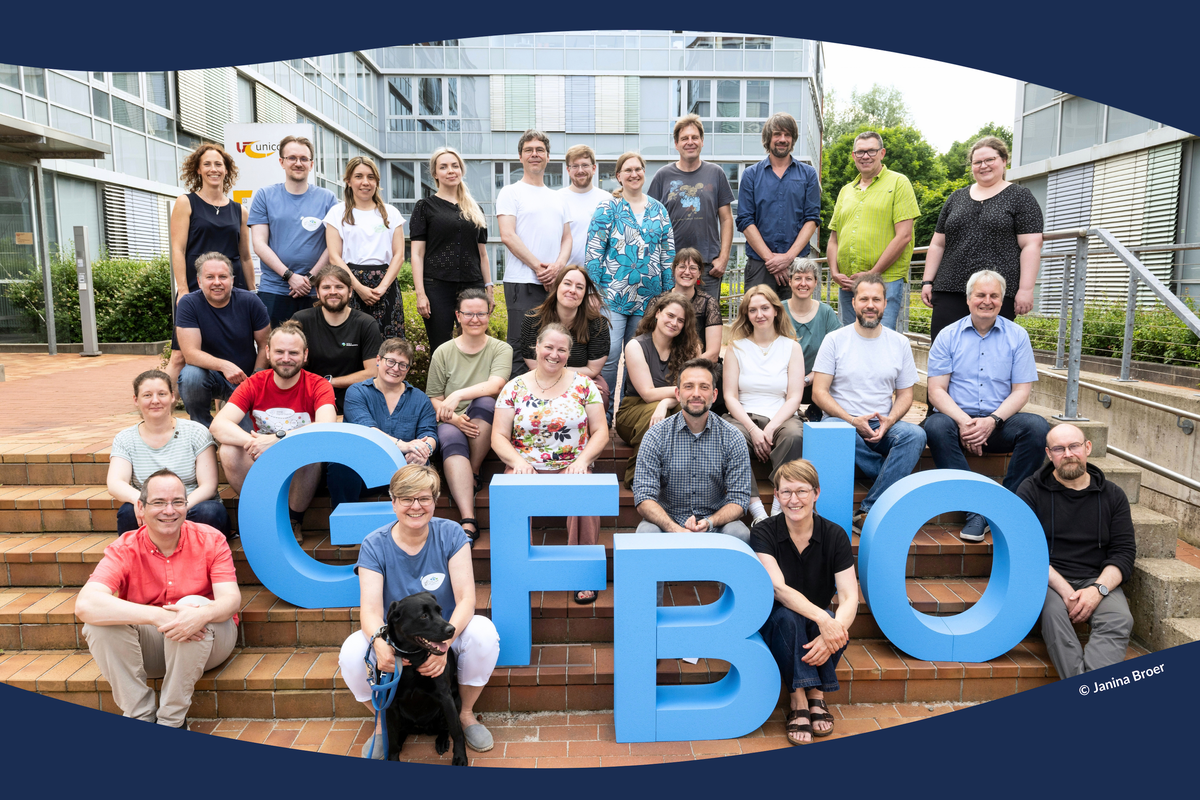
For ten years, the Bremen-based German Federation for Biological Data has worked to preserve research data for the long term, helping lay the groundwork for tomorrow’s AI-assisted science.
Data: a valuable resource at risk
They record birdsong, map plant species, sequence DNA and photograph insects. Every day, biologists collect vast amounts of data that tell us more about the world around us.
Yet this knowledge is more fragile than it might seem. Studies have shown for years that much of the data collected during research projects becomes inaccessible once those projects end. A 2022 survey of researchers across Europe found that more than 60 per cent stored their data only on personal storage devices, while just 18 per cent consistently used scientific data repositories. Long-term archiving is particularly important in biology. Data collected over many years can reveal patterns that no single study could detect, such as how changes in climate affect plants and animals.
That is where the German Federation for Biological Data (GFBio e.V.) comes in. For ten years, the Bremen-based non-profit association has worked to preserve scientific data for the long term so it can inform research, conservation and policy.
“For a long time, publications were seen as the main outcome of scientific work, even though the underlying data are just as valuable. In biodiversity research in particular, reliable data that have been checked for quality are becoming increasingly important for tackling research questions across borders, informing conservation decisions and supporting data-intensive methods such as AI.”
Professor Frank Oliver Glöckner | Board Chair and Founding Member, University of Bremen
Working with researchers, museums and data centres
GFBio’s roots go back to the early 2010s. Advances such as faster DNA sequencing, automated monitoring stations and digital imaging led to a rapid increase in the volume of data being collected. At the same time, datasets were scattered across universities and research institutes, and many were stored only temporarily. Anyone trying to find data or preserve it for the long term faced an uphill task.
To address this, the Biodiversity Data Working Group of the German Research Foundation’s (DFG) then Senate Commission on Biodiversity Research called for a single point of contact and information for biological data. In 2013, the DFG funded a collaborative project called “German Federation for Biological Data”. The association of the same name was founded in 2016.
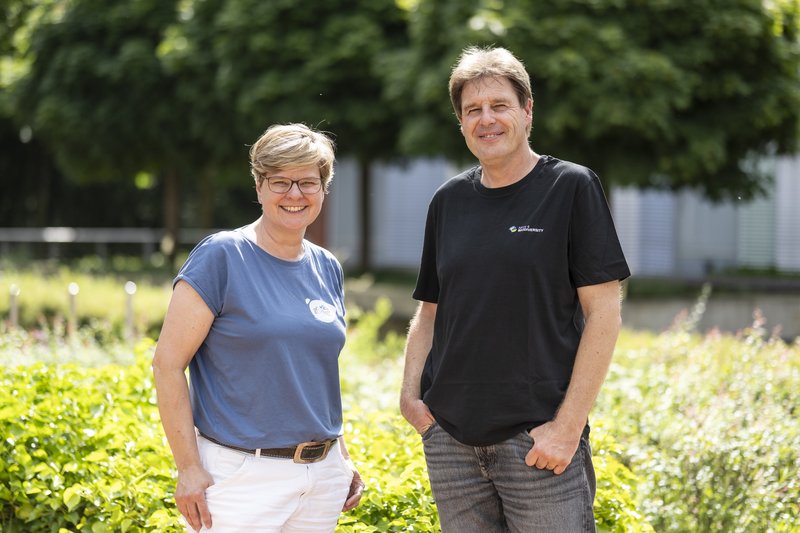
"When GFBio began, it was a project with a fixed end date. Today, the association is an established part of Germany’s research landscape. We can be proud of how far we’ve come. Funded projects end, but their data retain their value. That’s why we need people and institutions willing to take shared responsibility beyond any single funding period."
(Dr. Barbara Ebert | Executive Director)
GFBio’s partner institutions include the University of Bremen, the Alfred Wegener Institute in Bremerhaven, the Helmholtz Centre for Environmental Research (UFZ), the Leibniz Centre for Tropical Marine Research (ZMT) and the Museum für Naturkunde Berlin. The aim is to bring together expertise from research, scientific collections, data repositories and software development. This allows GFBio to support researchers from the first outline of a project through to publishing and preserving their data, while also helping other research institutions build data management practices that will serve them in the years ahead.
Good data management should be routine and manageable for researchers
GFBio’s 13 free “Services” address the practical challenges researchers face in their day-to-day work. Many funders now ask for a data management plan setting out what data a project will collect and where those data will be stored afterwards. GFBio has developed an online tool that guides researchers through the process, step by step, so they can draw up a plan that fits their project. If they need more help, GFBio specialists can review their plans, suggest improvements and answer questions.
“Some of us at GFBio come from research ourselves. We’ve always wanted to give researchers more time for what drew them to science in the first place: making new discoveries. Scientific data represent years of people’s time and hard-won knowledge. Preserving those data is a way of honoring that work; and with the right tools, it doesn't have to be a burden."
(Dr. Ivaylo Kostadinov | Software Development Team Lead)
Further support is available through the GFBio Helpdesk, a point of contact for questions about managing biological data. The association receives around 80 enquiries a year and usually replies within two days. The team in Bremen handles incoming enquiries and can call on specialists from GFBio’s nationwide network of partners when needed.
In addition, the team has developed a range of online tools to make data management easier for researchers. The Submission System, for instance, provides a single point of entry for data submissions. GFBio then checks the information provided and forwards the data to one of ten specialist data centres – scientific archives that manage particular types of biological data. In recent years, GFBio has supported the publication of more than 400 datasets in this way. Its other services include a comprehensive data search facility, visualisation tools and applications for data analysis.
“As a bioinformatician, I work with many different kinds of data that I regularly need to archive for the long term and publish. GFBio saves me several steps. I can use one form for multiple repositories and talk through all my questions with one person, instead of submitting my data to several databases. I really value that combination of easy-to-use technology and personal support.”
(Dr. Christiane Hassenrück | Bioinformatician at the Leibniz Institute for Baltic Sea Research Warnemünde)
From museum specimen to research resource for scientists worldwide
Alongside its support for individual researchers, GFBio works on scientific projects that make research data easier to access. One is NFDI4Biodiversity, a network of around 60 partners spanning research institutions, museums, scientific collections, environmental agencies and citizen science initiatives. The network is part of Germany’s National Research Data Infrastructure (NFDI), a joint initiative of the federal and state governments launched in 2020. It brings together more than 300 research institutions to preserve scientific data for the long term, connect datasets through shared standards and make them available for future reuse.
Through another project, WiNoDa, GFBio helps researchers and staff at natural history museums and scientific collections work confidently with data about the objects in their care, including through training. In DISC3D, which ended in 2025, GFBio helped make more than 6,000 high-resolution 3D scans of insects and fossils available through an open data portal. Researchers around the world can now work with the digital models while the fragile originals remain protected.
Tomorrow’s research needs today’s data
The need for GFBio’s work is only growing. AI can sift through billions of observations in seconds and spot patterns that might otherwise escape even an expert eye. But the results are only as reliable as the data behind them. Those data need to be accurate, well documented and traceable to their source. GFBio helps make that possible, so biological data can still be understood, compared and used long after the projects that produced them have ended. In Bremen, the association has found an ideal home for this work.
“GFBio’s story shows how Bremen’s research community works. Long-standing collaboration, trust built over time and a willingness to try new approaches together can lead to innovation in science policy. An initiative that grew out of Bremen’s research community is now recognised across Germany and is helping shape major programmes such as the NFDI. That shows what a research community can achieve when people can reach each other easily and partnerships are strong.”
(Professor Michal Kucera | Vice President for Research and Transfer at the University of Bremen)
The anniversary is a chance to thank the people and institutions that have built GFBio and its wider network. It’s also a moment to renew the commitment that brought them together in the first place: helping researchers and institutions preserve valuable data so future generations can put it to use.
GFBio in a nutshell
The German Federation for Biological Data (GFBio e.V.) is a non-profit association based in Bremen. Since its founding in 2016, GFBio has worked with its member institutions to develop and run services for managing biological, ecological and environmental research data. These include advice and training, data management planning, data publication, search and analysis, and long-term archiving. GFBio has 24 institutional members, works with ten specialised data centres and offers 13 free online tools for working with research data. As a coordinating partner in NFDI4Biodiversity, the association also helps build Germany’s National Research Data Infrastructure (NFDI).
Curious about the work behind the data?
If you’d like to learn more about GFBio and how we work with biological research data, we’d be happy to hear from you. We can give you a closer look at our work, answer your questions or put you in touch with someone from our team or our nationwide network. Get in touch. We’d love to talk.
Contact
Executive Director
Dr. Barbara Ebert | bebert@gfbio.org | +49 160 2219569
Press & Public Relations
Katharina Frohne | kfrohne@gfbio.org | +49 421 80719844